Autologous Serum vs. Artificial Tears: What's the Real Difference?
Autologous Serum vs. Artificial Tears: What's the Real Difference?
Patients dealing with severe dry eye often ask whether autologous serum tears are really meaningfully different from the best commercial artificial tears. The short answer is yes — in a fundamental way. Understanding the difference helps patients and providers appreciate why autologous serum is reserved for more serious cases but also why it can produce results that commercial products simply cannot match.
What Artificial Tears Are — and What They Can't Do
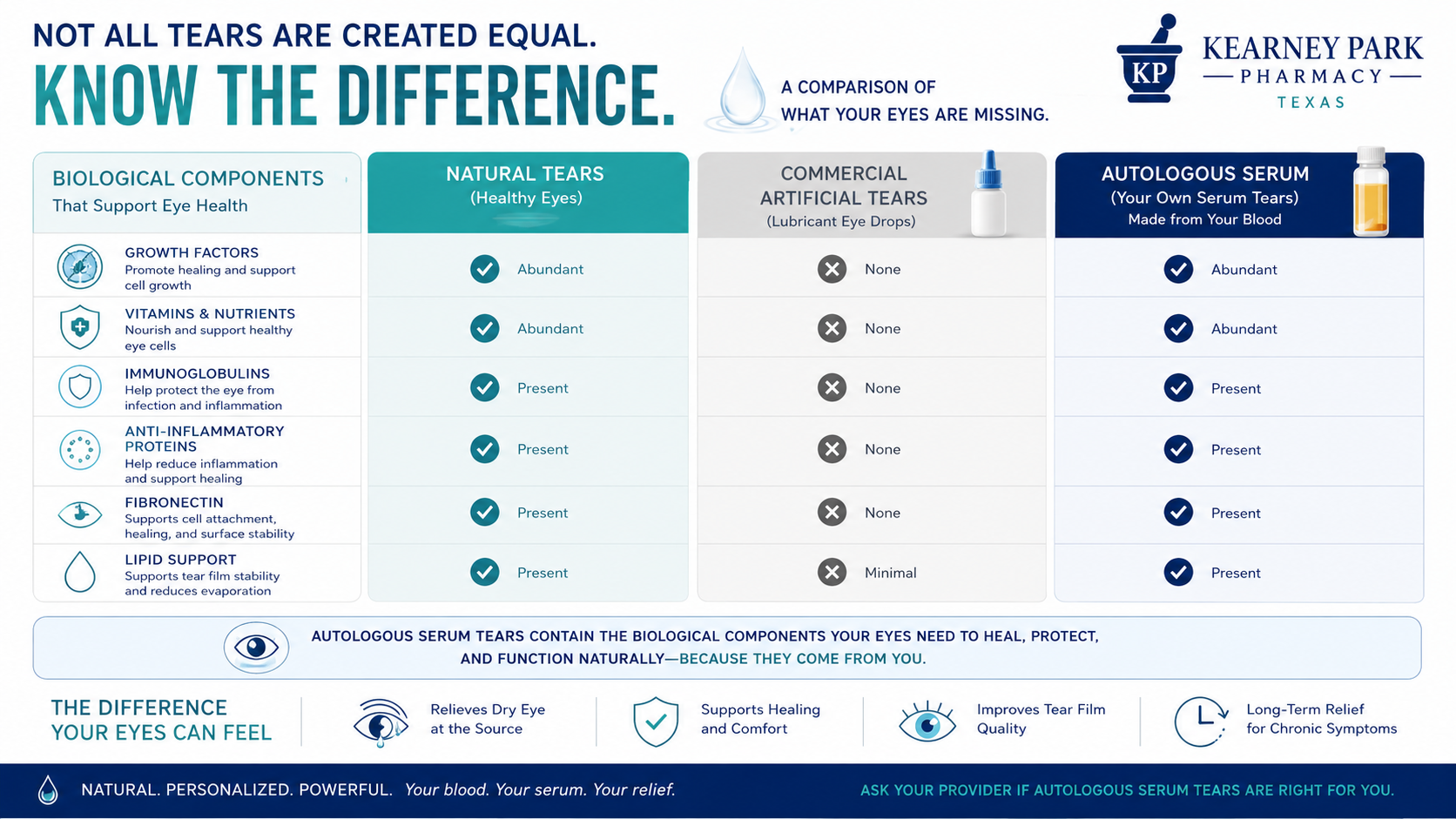
Commercial artificial tears are primarily lubricants. They contain water, a viscosity-enhancing agent (like carboxymethylcellulose, hyaluronic acid, or polyethylene glycol), and sometimes electrolytes. They coat and lubricate the ocular surface, providing temporary relief from friction and dryness. High-quality formulations do this very well. For mild to moderate dry eye, they are appropriate and effective.
What commercial artificial tears do not contain is the biological payload of natural tears: growth factors that signal epithelial cells to proliferate and migrate, fibronectin that helps cells adhere and heal wounds, vitamins that support cell metabolism, immunoglobulins that provide immune defense, and neuropeptides that support corneal nerve health. These components are too complex and too biologically active to be manufactured synthetically at this time.
What Autologous Serum Provides That Artificial Tears Cannot
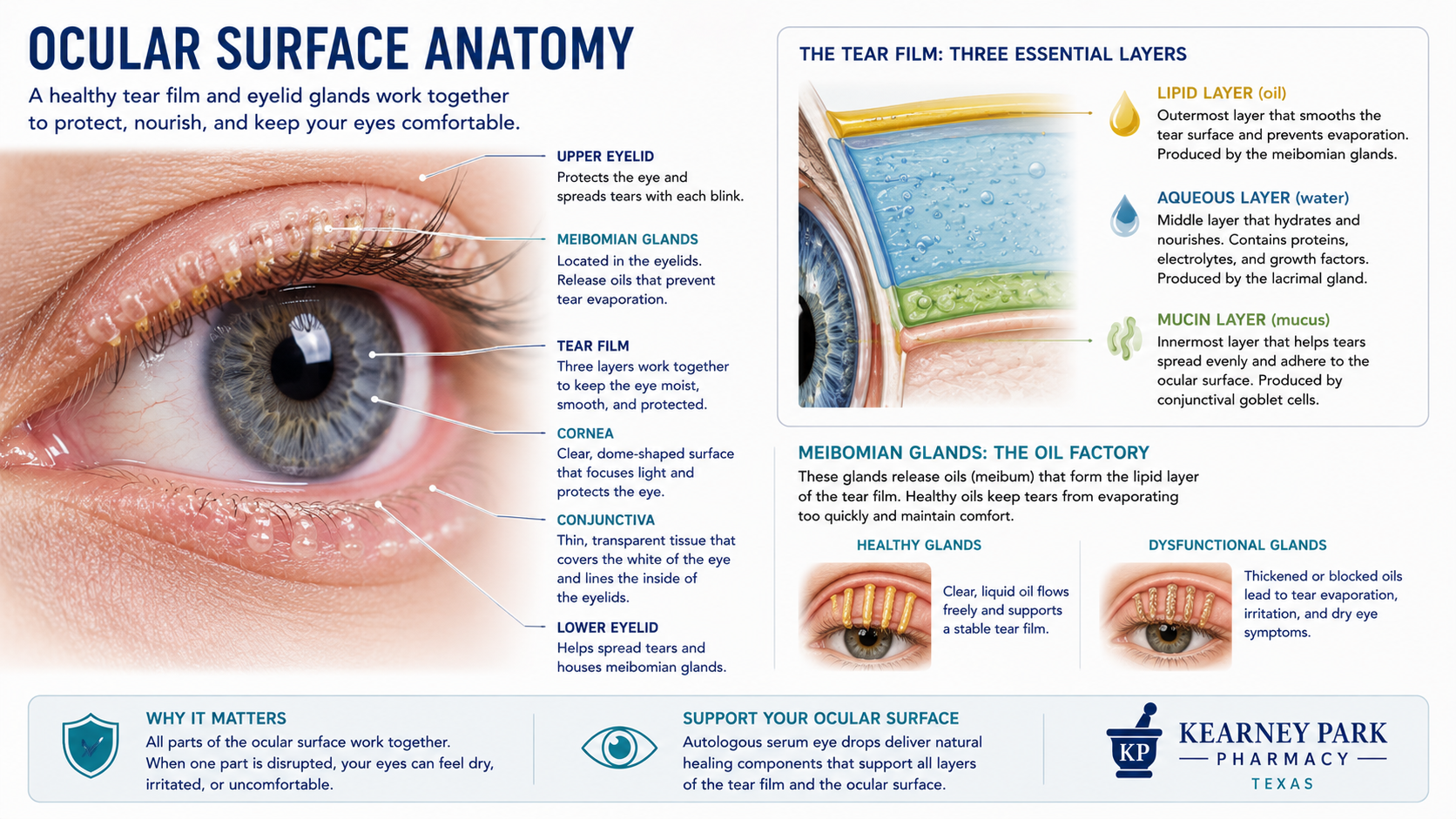
Autologous serum contains most of the biologically active components of natural tears — not because it is a copy of tears, but because blood serum happens to share many of the same proteins, growth factors, and vitamins. Specifically, serum contains EGF (epidermal growth factor), which stimulates epithelial cell growth; TGF-beta, which regulates wound healing and immune response; fibronectin, which aids cell adhesion; vitamin A, which is essential for epithelial differentiation; and immunoglobulins, which support local immune defense.
These components don't just lubricate the surface — they actively promote healing and maintenance of the ocular surface epithelium. For a patient with a compromised, inflamed, or chronically damaged surface, this biological support can make a fundamental difference in outcomes.
When to Move from Artificial Tears to Serum Tears
Artificial tears remain the right first-line approach for the vast majority of dry eye patients. Autologous serum tears become relevant when the ocular surface condition is severe, when artificial tears provide inadequate relief despite optimal dosing, and when the underlying diagnosis (Sjogren's, GVHD, neurotrophic keratitis, SJS, persistent epithelial defects) suggests that active biological support is needed for healing.
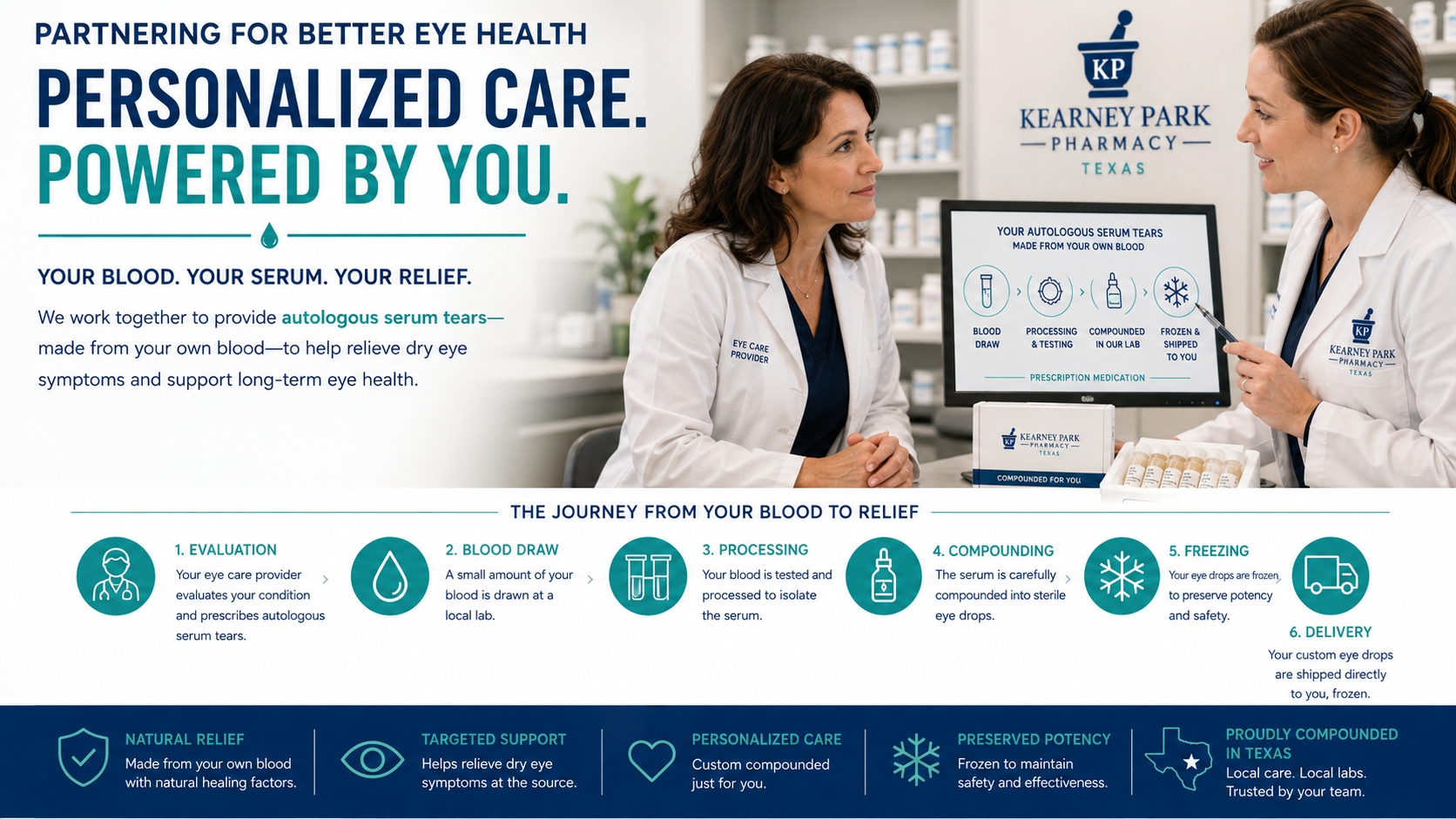
The clinical decision to move from artificial tears to serum tears is made by your eye care provider based on your specific diagnosis, clinical findings, and response to conventional treatment. This is not a self-directed decision — autologous serum tears require a prescription and must be prepared by a licensed sterile compounding pharmacy.
Practical Differences: Convenience vs. Efficacy
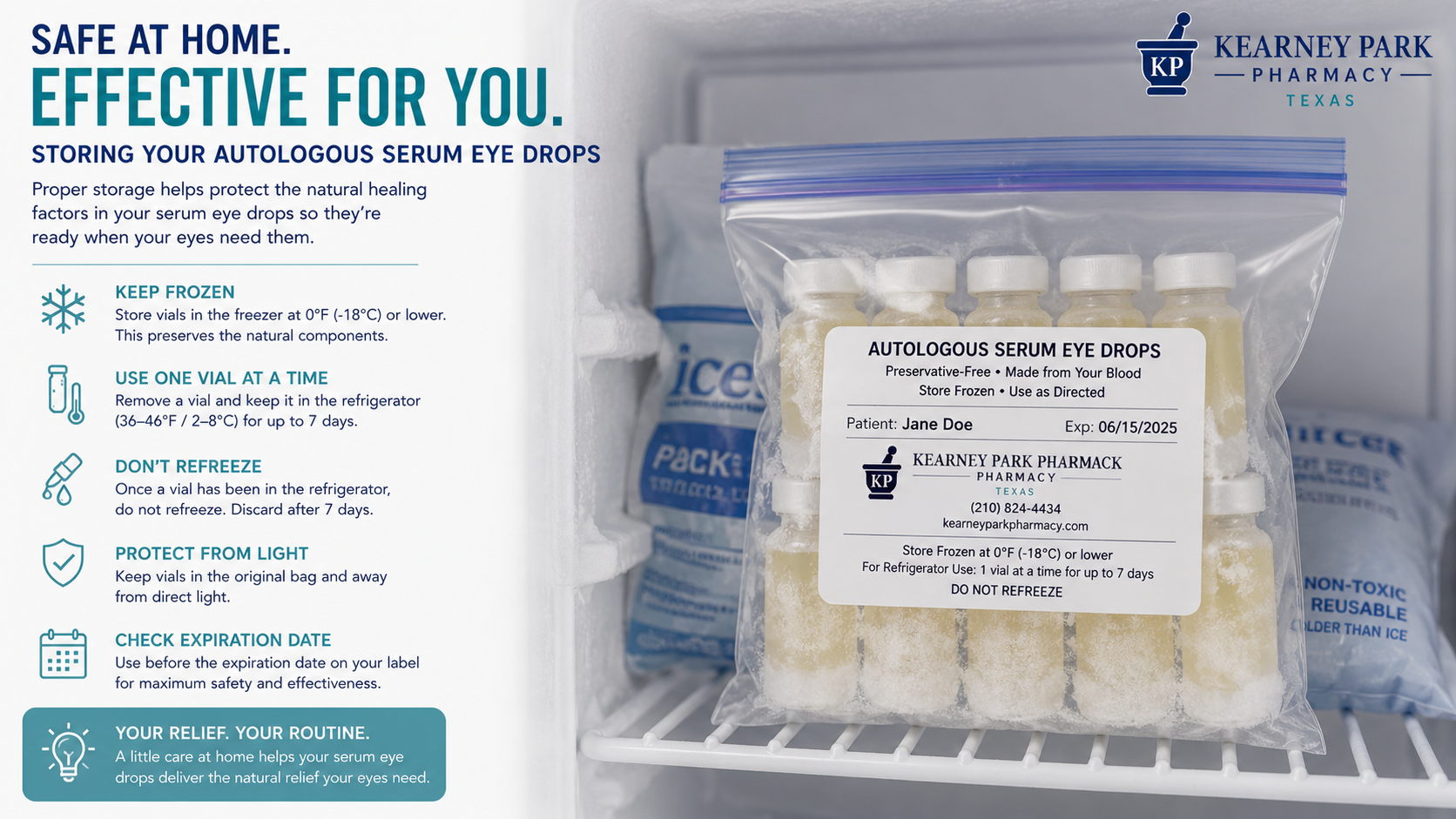
From a practical standpoint, artificial tears win on convenience. They are available over the counter, require no special storage, and can be used anytime. Autologous serum tears require a blood draw, a preparation process, frozen storage, and careful thawing and use-time management. For patients with mild symptoms, these practical burdens outweigh the benefits.
But for patients with severe ocular surface disease, the therapeutic benefit of serum tears often significantly outweighs the practical inconveniences. Many patients report dramatic improvement in comfort and vision stability that they were unable to achieve with any commercial product. For them, the process is well worth it.
Frequently Asked Questions
Can I use artificial tears alongside autologous serum drops?
Many patients do use artificial tears in addition to autologous serum, particularly during the day when additional lubrication is helpful. Your provider will advise on the optimal regimen — how often to use serum drops, what to use in between, and whether there are any specific products to avoid. Timing the application of different drops should also follow your provider's guidance.
Are there any commercial products that are similar to autologous serum?
There are some commercial products containing blood-derived or platelet-derived components, and some contain cord blood serum. These are not autologous (not from the patient's own blood) but aim to provide similar biological factors. Their efficacy data varies, and they may not be available in all areas. Your ophthalmologist or optometrist can advise on the options that are most appropriate for your diagnosis.
How do I get started with autologous serum tears in Texas?
Speak with your ophthalmologist or optometrist to see if you are a candidate. If you receive a prescription, Kearney Park Pharmacy coordinates the entire process — including guiding your provider's office on blood collection and shipping. Call us at 972-329-1168 and we will walk you through next steps.
READY TO ORDER? CONTACT KEARNEY PARK PHARMACY
When artificial tears aren't enough, autologous serum may be the answer. Ask your eye doctor, then call Kearney Park Pharmacy at 972-329-1168. We ship statewide across Texas.
Phone: 972-329-1168 | Fax: 972-329-1436 | kpprx.org
3224 Gus Thomasson Rd, Mesquite, TX 75150 Shipping Statewide Across Texas