The Science Behind Autologous Serum: Growth Factors, Healing, and the Ocular Surface
Park • May 30, 2026

The Science Behind Autologous Serum: Growth Factors, Healing, and the Ocular Surface

For clinicians and scientifically curious patients, understanding why autologous serum tears work requires a look at the biology of the ocular surface. The effectiveness of these drops is not simply about lubrication — it is about delivering a complex biological matrix that supports the health, maintenance, and repair of corneal and conjunctival tissue.

The Biological Composition of Serum

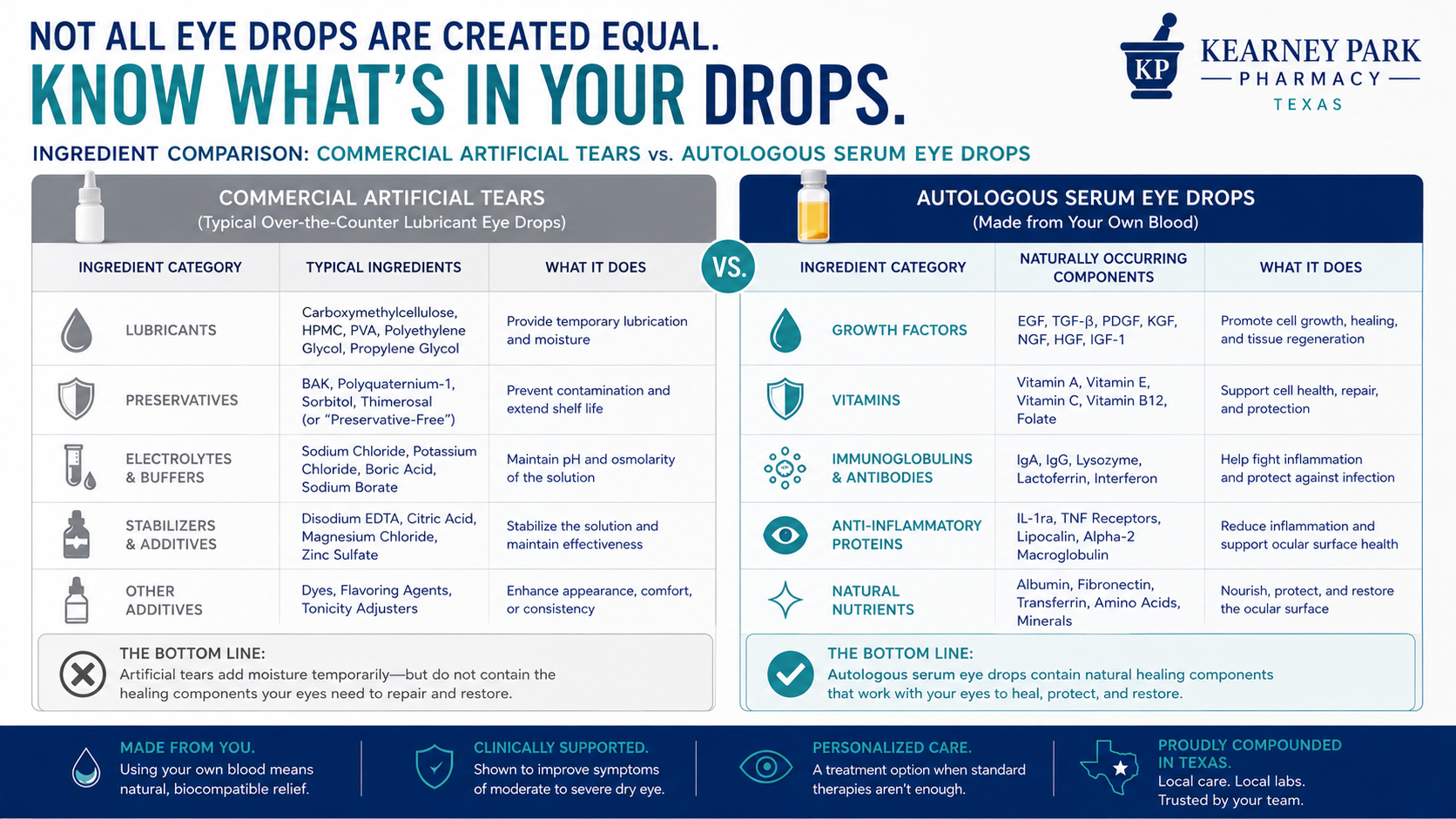
Blood serum is the liquid component of blood that remains after cellular elements and clotting factors are removed. It is a complex mixture of proteins, growth factors, vitamins, immunoglobulins, electrolytes, and small molecules. Many of these components are identical or closely similar to those found in normal human tears, making serum a remarkably appropriate biological substitute for patients whose own tear production is compromised.

Key components include epidermal growth factor (EGF), transforming growth factor beta (TGF-beta), insulin-like growth factor-1 (IGF-1), fibronectin, vitronectin, vitamin A (retinol), vitamin B12, lysozyme, lactoferrin, and immunoglobulins (IgA, IgG, IgM). Each plays a specific role in maintaining ocular surface health.


Epidermal Growth Factor (EGF): The Healing Signal

EGF is one of the most clinically important components of autologous serum tears. It binds to EGF receptors on corneal and conjunctival epithelial cells, triggering signaling cascades that promote cell proliferation, migration, and differentiation. These are exactly the processes needed to heal a damaged or deficient ocular surface.

Studies have shown that EGF significantly accelerates corneal epithelial wound healing. In patients with persistent epithelial defects — wounds on the corneal surface that fail to heal normally — the delivery of EGF via autologous serum tears provides the healing signal the cells need. Commercial artificial tears contain no EGF.

Fibronectin: The Structural Scaffold for Healing

Fibronectin is a glycoprotein that acts as a structural scaffold for epithelial cell attachment and migration. During wound healing, cells need a surface to adhere to as they migrate across the wound bed. Fibronectin in the tear film (and in autologous serum drops) provides this scaffold. Patients with deficient tear fibronectin — as seen in some forms of severe OSD — benefit from this component in serum tears.

Fibronectin deficiency has been associated with poorer outcomes in corneal wound healing and increased risk of recurrent erosion. Restoring adequate fibronectin levels at the ocular surface through autologous serum tears can improve these outcomes.


Vitamin A: Supporting Epithelial Differentiation

Vitamin A (retinol) is essential for the normal differentiation of epithelial cells. At the ocular surface, vitamin A maintains the mucin-secreting goblet cells of the conjunctiva, which are critical for tear film stability. Vitamin A deficiency can lead to squamous metaplasia — a pathological change in the conjunctival surface that worsens tear film instability. Autologous serum contains meaningful concentrations of vitamin A, delivering this essential cofactor directly to the ocular surface.

This is one reason why autologous serum tears are particularly valuable for patients with mucin deficiency or goblet cell loss, a feature commonly seen in Sjogren's syndrome, GVHD, and SJS.

Frequently Asked Questions

Is the concentration of growth factors in serum similar to natural tears?

The concentrations of many biologically active components in serum are comparable to or higher than those in natural tears, making serum a reasonable biological substitute. The 20% dilution most commonly used brings concentrations into ranges that approximate normal tear physiology for many components. The 50% concentration provides a higher biological load for more severe cases.

Does the quality of autologous serum vary between patients?

Yes, to some extent. The serum of a healthy adult contains the full complement of growth factors and proteins, but concentrations can vary with age, nutritional status, medications, and underlying conditions. In general, the serum of the patient's own blood is the best available source of these biological components specifically tailored to that individual.

Can the growth factors in serum tears cause any adverse effects on the eye?

The biological components of autologous serum are naturally present in tears and are recognized by the patient's own body — there is no foreign protein to react against. When prepared properly under sterile conditions, autologous serum drops have an excellent safety profile. Adverse events related to the serum components themselves are very rare. Any eye irritation or change should be reported to your provider.


READY TO ORDER? CONTACT KEARNEY PARK PHARMACY

Kearney Park Pharmacy compounds autologous serum tears under USP 797 standards and ships to patients across Texas. Call 972-329-1168 or ask your eye doctor to contact us.

Phone: 972-329-1168  |  Fax: 972-329-1436  |  kpprx.org

3224 Gus Thomasson Rd, Mesquite, TX 75150     Shipping Statewide Across Texas

By Park June 5, 2026
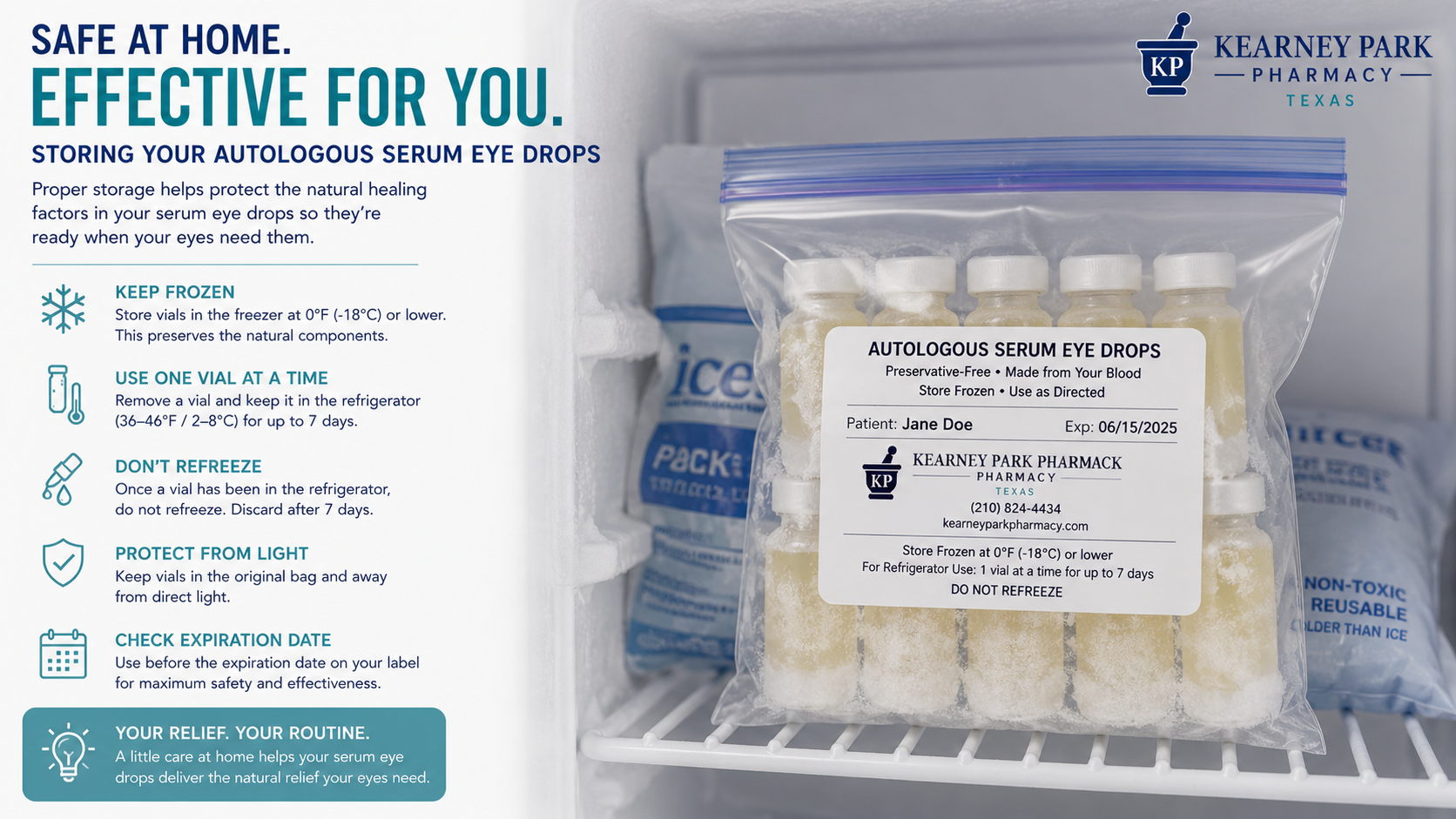
Shipping Autologous Serum Eye Drops Across Texas: How We Keep Them Safe One of the most common concerns patients and providers have about autologous serum tears is whether they can be shipped safely without losing their biological effectiveness. The answer is yes — with appropriate frozen shipping methods, autologous serum tears can be shipped anywhere in Texas while maintaining the cold chain required to preserve their biological activity. Kearney Park Pharmacy has the shipping expertise to ensure your autologous serum drops arrive frozen and intact. Here is how we do it. Why Frozen Shipping Is Required The growth factors, vitamins, and proteins that make autologous serum tears therapeutically effective are biological molecules. Like all proteins, they are susceptible to degradation — both from microbial activity and from the temperature-sensitive conformational changes that can occur at warmer temperatures over time. Freezing essentially 'pauses' biological activity, preserving the components in their active state until the drops are thawed for use. Shipping at refrigerated (not frozen) temperatures alone is insufficient for the extended stability required across transit times. Frozen shipping maintains the drops in the same state they were in when they left our pharmacy — safe, sterile, and biologically potent.  Our Shipping Method: Dry Ice and Insulated Containers Kearney Park Pharmacy ships autologous serum tears in insulated containers with dry ice to maintain a frozen state throughout transit. Dry ice maintains temperatures well below freezing, ensuring the drops remain frozen even if transit takes 24-48 hours. We carefully calculate the amount of dry ice needed based on the transit time to your location in Texas. Each shipment is packaged to minimize the risk of the insulated container being compromised during handling. We use appropriate outer packaging to contain the dry ice safely and label shipments clearly with handling instructions. We track every shipment and can provide updates on delivery status. What to Do When Your Shipment Arrives When your autologous serum drops arrive, handle the dry ice carefully — do not touch it directly with bare hands (use gloves or a cloth). Remove the bottles from the dry ice packaging and transfer them promptly to your freezer. Do not leave them at room temperature — even if they are still frozen when they arrive, unnecessary warming shortens their remaining shelf life. Inspect the packages for any damage. Each bottle should be sealed with no signs of leaking. If any bottle appears damaged or shows signs of having thawed and refrozen (ice crystals on the outside, unusual appearance of the liquid inside), contact Kearney Park Pharmacy immediately at 972-329-1168 before using that bottle. Coordinating Delivery for Your Schedule We work with you to schedule shipping on days that ensure prompt delivery and that you will be available to receive and refrigerate the package. We typically do not ship late in the week to avoid packages sitting in carrier facilities over a weekend. For patients who know they will be away, we coordinate shipping for when they return. If you have specific delivery concerns — a location that is difficult for carriers to access, a need for a specific delivery day, or questions about shipping to a remote Texas location — call us at 972-329-1168 before your next order. We will work out the best plan for your situation. Frequently Asked Questions What if I'm not home when the shipment arrives? For frozen shipments with dry ice, a several-hour window of maintained temperature is typical even after delivery. However, prompt retrieval is important. If you know you won't be home, consider having a neighbor receive the package, asking the carrier to leave it in a shaded location, or scheduling delivery for a day when someone will be present. Call 972-329-1168 if you have specific concerns. Can you ship autologous serum tears to rural parts of Texas? Yes. We ship throughout Texas including rural areas. Shipping times to rural locations may be slightly longer, which we account for in our dry ice quantity. We have shipped to communities in all regions of Texas. Call 972-329-1168 to confirm shipping to your specific location and discuss the expected transit time. How much does shipping cost for autologous serum tears? Shipping costs for frozen products with dry ice are higher than standard shipping due to the special packaging required. Contact Kearney Park Pharmacy at 972-329-1168 for current shipping fee information specific to your location and order size. We are transparent about all costs before your order ships. READY TO ORDER? CONTACT KEARNEY PARK PHARMACY Kearney Park Pharmacy ships frozen autologous serum eye drops across Texas with proper cold-chain care. Call 972-329-1168 to coordinate your order. Phone: 972-329-1168 | Fax: 972-329-1436 | kpprx.org 3224 Gus Thomasson Rd, Mesquite, TX 75150 Shipping Statewide Across Texas
By Park June 5, 2026
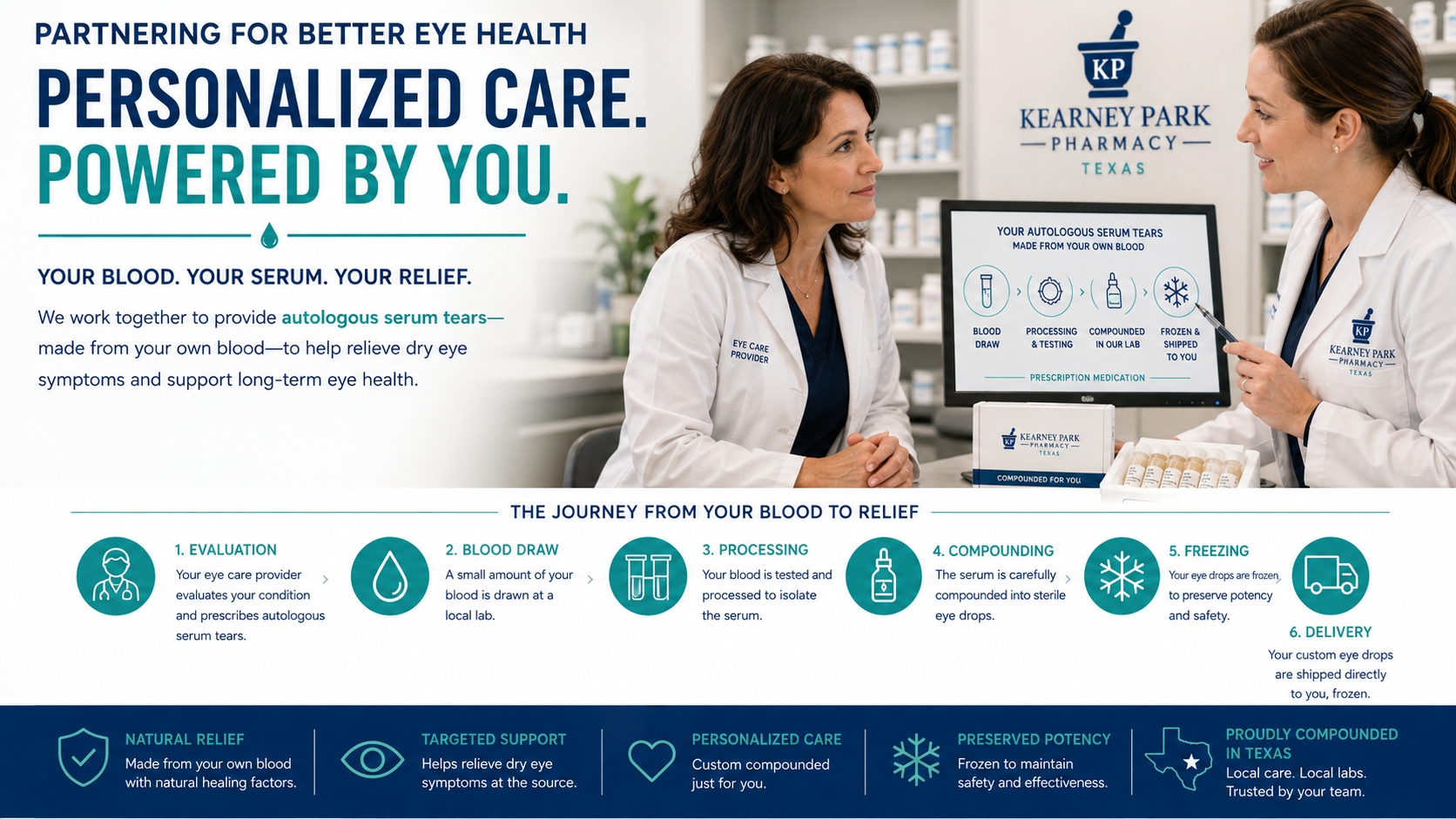
What Texas Eye Doctors Need to Know About Prescribing Autologous Serum Tears For ophthalmologists and optometrists in Texas who want to incorporate autologous serum tears into their treatment protocols for severe OSD patients, having a reliable compounding pharmacy partner that manages the process smoothly is essential. The preparation is more complex than a standard compounding order, and the logistics require clear communication between provider, patient, and pharmacy. Kearney Park Pharmacy in Mesquite, Texas, handles the autologous serum tear preparation process end-to-end and ships to patients statewide. Here is what providers need to know. Writing the Prescription: What to Include A complete autologous serum tear prescription should include: patient name and DOB, 'autologous serum ophthalmic solution,' concentration (20% or 50%), quantity (number of bottles and volume per bottle — typically 5mL bottles), dosing instructions (drops per eye and frequency), number of refills, and your complete prescriber information. Note any special instructions about packaging (e.g., single-dose units if preferred). Contact Kearney Park Pharmacy before the first prescription to coordinate the blood draw logistics. We will provide your office with instructions for blood collection, appropriate tube types, and shipping requirements for the sample. This pre-prescription coordination ensures the process goes smoothly.  Blood Collection and Shipping to Our Pharmacy The blood draw can be performed in your office, at a phlebotomy lab, or at another collection site, depending on your practice setup. We provide collection instructions specifying the tube type, volume needed, and how to handle and ship the sample. Generally, the whole blood is shipped overnight to us on ice (not frozen). We process it upon arrival. If you prefer to have a lab process the serum before shipping, we can work with that arrangement as well. The key requirement is that the serum arrives at our pharmacy under conditions that preserve its quality. Our team is experienced in coordinating these logistics and will guide your staff through the process. Patient Selection and Setting Expectations Autologous serum tears work best for patients with clear biological rationale — Sjogren's, GVHD, neurotrophic keratitis, persistent epithelial defects, SJS. For patients with less severe or more typical dry eye, the benefit-to-complexity ratio may not favor serum tears, and conventional treatments should be optimized first. Setting appropriate patient expectations is also important. Not all patients see immediate dramatic improvement. The biological support provided by serum tears promotes healing over time, and patients should be counseled to continue therapy consistently and monitor outcomes at follow-up. Insurance prior authorization may be required and should be initiated early in the process. Ongoing Management and Refill Coordination For patients on ongoing autologous serum therapy, repeat blood draws are needed periodically. We recommend planning refill cycles in advance so patients don't run out of their supply. Kearney Park Pharmacy proactively contacts established patients about their supply levels and helps coordinate timing. For providers with multiple OSD patients on serum therapy, we can manage the coordination for all of them. We appreciate and value our provider relationships. Our goal is to handle the pharmacy logistics so thoroughly that your involvement after the initial prescription is minimal — just the ongoing clinical monitoring that belongs with your expertise. Frequently Asked Questions Does Kearney Park Pharmacy accept autologous serum prescriptions from outside the DFW area? Absolutely. We serve eye care providers and patients throughout Texas. The blood draw can be coordinated locally for the patient (at a lab near them) and shipped to us. We then ship the finished drops back to the patient anywhere in Texas. Geography is not a barrier. What documentation do you provide for provider records? We can provide information about the preparation process, beyond-use dating approach, and storage requirements upon request. Providers who want documentation of our compounding standards for quality assurance purposes can contact us at 972-329-1168. Can you help with prior authorization documentation for autologous serum tears? Yes, to the extent possible. We can provide pharmacy-related documentation (preparation details, product information) that may support a prior authorization request. The clinical documentation (diagnosis, prior treatment failure, clinical necessity) should come from your office. Call 972-329-1168 to discuss what we can provide. READY TO ORDER? CONTACT KEARNEY PARK PHARMACY Texas eye care providers: Kearney Park Pharmacy manages the autologous serum preparation process end-to-end. Call 972-329-1168 to set up your provider account and discuss your first patient. Phone: 972-329-1168 | Fax: 972-329-1436 | kpprx.org 3224 Gus Thomasson Rd, Mesquite, TX 75150 Shipping Statewide Across Texas
By Park June 4, 2026
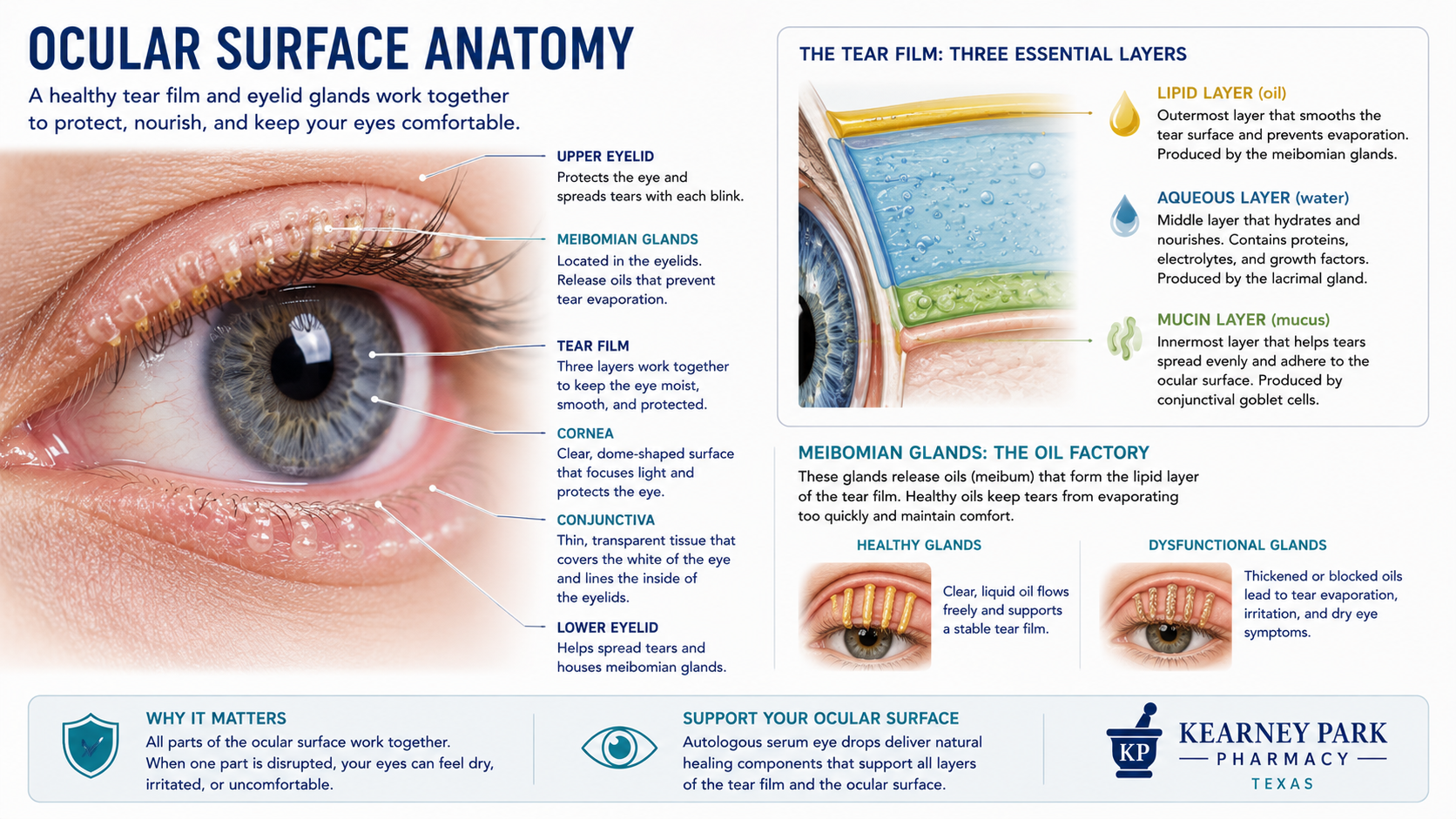
Ocular Surface Disease and the Role of Autologous Serum Tears Ocular surface disease (OSD) is an umbrella term encompassing a range of conditions that affect the health and function of the eye's surface — the cornea, conjunctiva, and tear film. It is one of the most common reasons patients see an eye doctor and one of the most impactful in terms of quality of life. Severe OSD can cause constant discomfort, reduced vision, and significant functional limitations. For patients with severe or refractory OSD, autologous serum tears represent one of the most biologically meaningful therapeutic options available. Here is how they fit into the management of OSD. What Is Ocular Surface Disease? The ocular surface includes the corneal and conjunctival epithelium, the tear film, the meibomian glands (which produce the lipid layer of tears), the lacrimal glands (which produce the aqueous layer), and the goblet cells (which produce mucins). Disease affecting any of these components can cause the constellation of symptoms that patients describe as dry eye, burning, gritty sensation, light sensitivity, and blurred vision. OSD can range from mild evaporative dry eye (very common, often managed with over-the-counter artificial tears and warm compresses) to severe aqueous-deficient dry eye (as seen in Sjogren's syndrome) or severe inflammatory and destructive surface disease (as in GVHD, SJS, or neurotrophic keratitis). The more severe end of this spectrum is where autologous serum tears are most clinically relevant.  How Autologous Serum Addresses the Biological Deficit In severe OSD, the tear film is not just insufficient in volume — it lacks the biological components needed to sustain healthy surface cells. The surface epithelium, deprived of growth factors, vitamins, and structural proteins, becomes unstable, inflamed, and prone to breakdown. This is not a problem that more lubricant can fix. Autologous serum tears introduce the biological components that the compromised tear film cannot provide. EGF and other growth factors stimulate epithelial cell proliferation and migration — essential for healing the surface. Fibronectin supports cell attachment. Vitamin A normalizes epithelial differentiation. The result, in patients who respond to therapy, is a surface that heals and stabilizes rather than one that continues to break down. Integration with Other OSD Treatments Autologous serum tears are not used in isolation — they are part of a comprehensive OSD management plan. Patients typically continue other appropriate treatments alongside serum drops: anti-inflammatory drops (cyclosporine, lifitegrast), meibomian gland treatments if applicable, punctal plugs if appropriate, and other supportive measures. Serum tears provide the biological support component that other treatments do not. Your ophthalmologist will design a treatment plan that addresses all components of your OSD. Autologous serum tears fit into that plan as one element, typically prescribed when the surface disease is severe enough to require their biological support in addition to standard therapies. Getting Access to Autologous Serum Tears in Texas For Texas patients with severe OSD, access to autologous serum tears requires a prescription from an eye care provider and a compounding pharmacy capable of preparing them properly. Kearney Park Pharmacy is a licensed sterile compounding pharmacy in Mesquite, Texas, that coordinates the full process — from blood draw logistics to sterile preparation to statewide shipping. We work with ophthalmologists, optometrists, and cornea specialists across Texas to serve their patients with severe OSD. If your provider has prescribed autologous serum tears or is considering doing so, call us at 972-329-1168 or ask them to contact us directly. Frequently Asked Questions How often do I apply autologous serum drops for OSD? Dosing varies by condition and severity. Common regimens range from 4 to 8 times daily, and some protocols use them hourly in acute situations. Your prescribing provider will specify the exact dosing on your prescription. Always follow your provider's instructions. What if my OSD has not improved after several months of serum tears? Report this to your eye care provider. They will reassess your condition, evaluate whether your diagnosis is accurate, consider adjusting the concentration or frequency, or explore additional or alternative treatments. Autologous serum tears are highly effective for many patients but not a universal solution for all forms of OSD. Does Kearney Park Pharmacy work with cornea specialists? Yes. We work with cornea specialists and general ophthalmologists across Texas who prescribe autologous serum tears. If you are a cornea specialist and want to establish a referral relationship with us, call 972-329-1168. We handle the entire preparation and shipping process so your patients receive a seamless experience. READY TO ORDER? CONTACT KEARNEY PARK PHARMACY Kearney Park Pharmacy prepares autologous serum tears for Texas patients with ocular surface disease. Ask your eye doctor for a prescription and call us at 972-329-1168. Phone: 972-329-1168 | Fax: 972-329-1436 | kpprx.org 3224 Gus Thomasson Rd, Mesquite, TX 75150 Shipping Statewide Across Texas

Show More