Autologous Serum Eye Drops for Severe Dry Eye: Does the Evidence Support It?
Autologous Serum Eye Drops for Severe Dry Eye: Does the Evidence Support It?
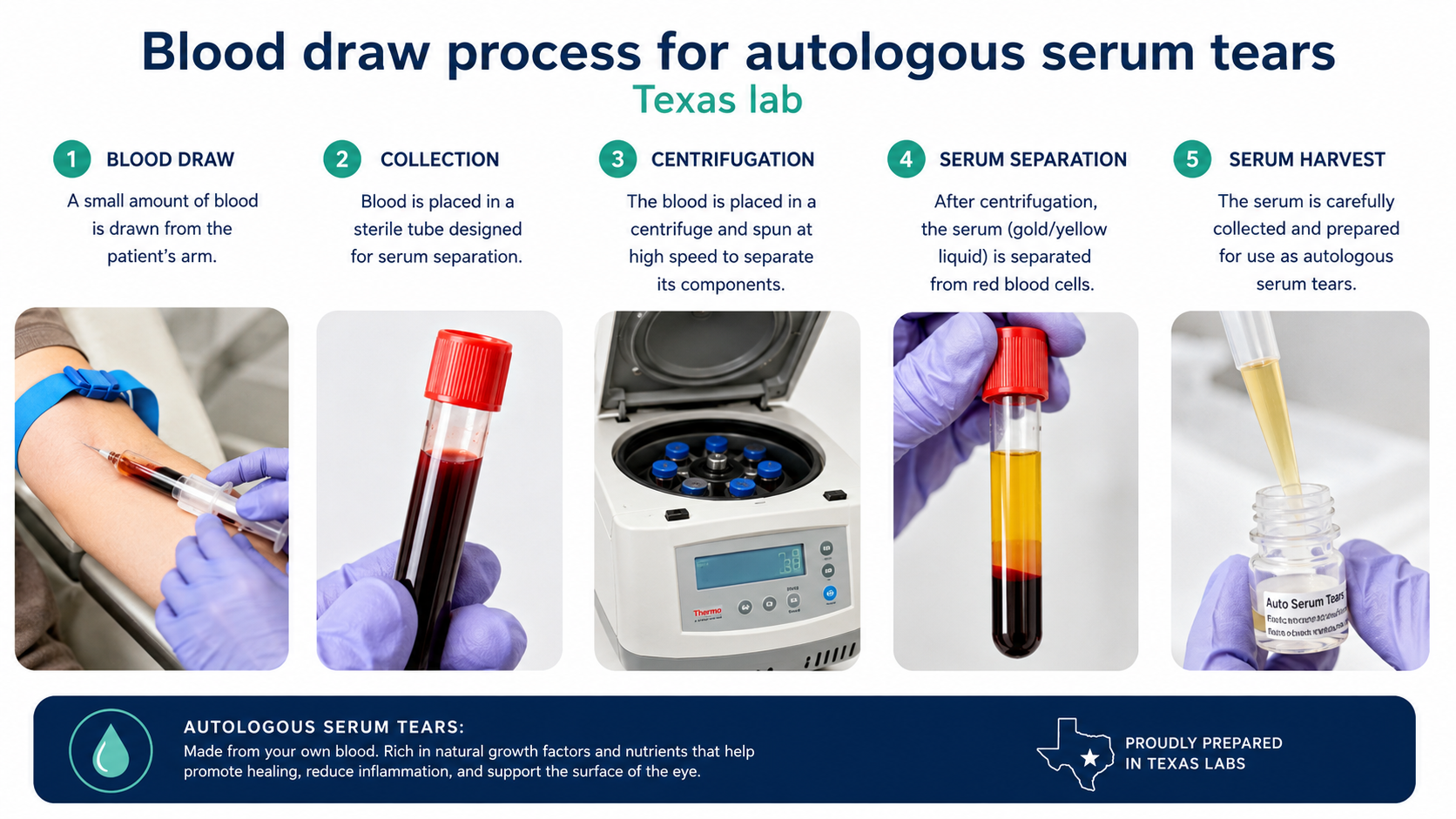
When eye care providers recommend autologous serum tears, some patients — and even some providers — ask whether the evidence supports their use. The answer is yes: autologous serum eye drops have a meaningful body of clinical evidence supporting their use in specific severe ocular surface conditions. Here is what the research shows.
As always, the decision about whether autologous serum tears are appropriate for any individual patient belongs to that patient's prescribing eye care provider. This article summarizes general findings from published research.
Why Biological Components Make a Difference
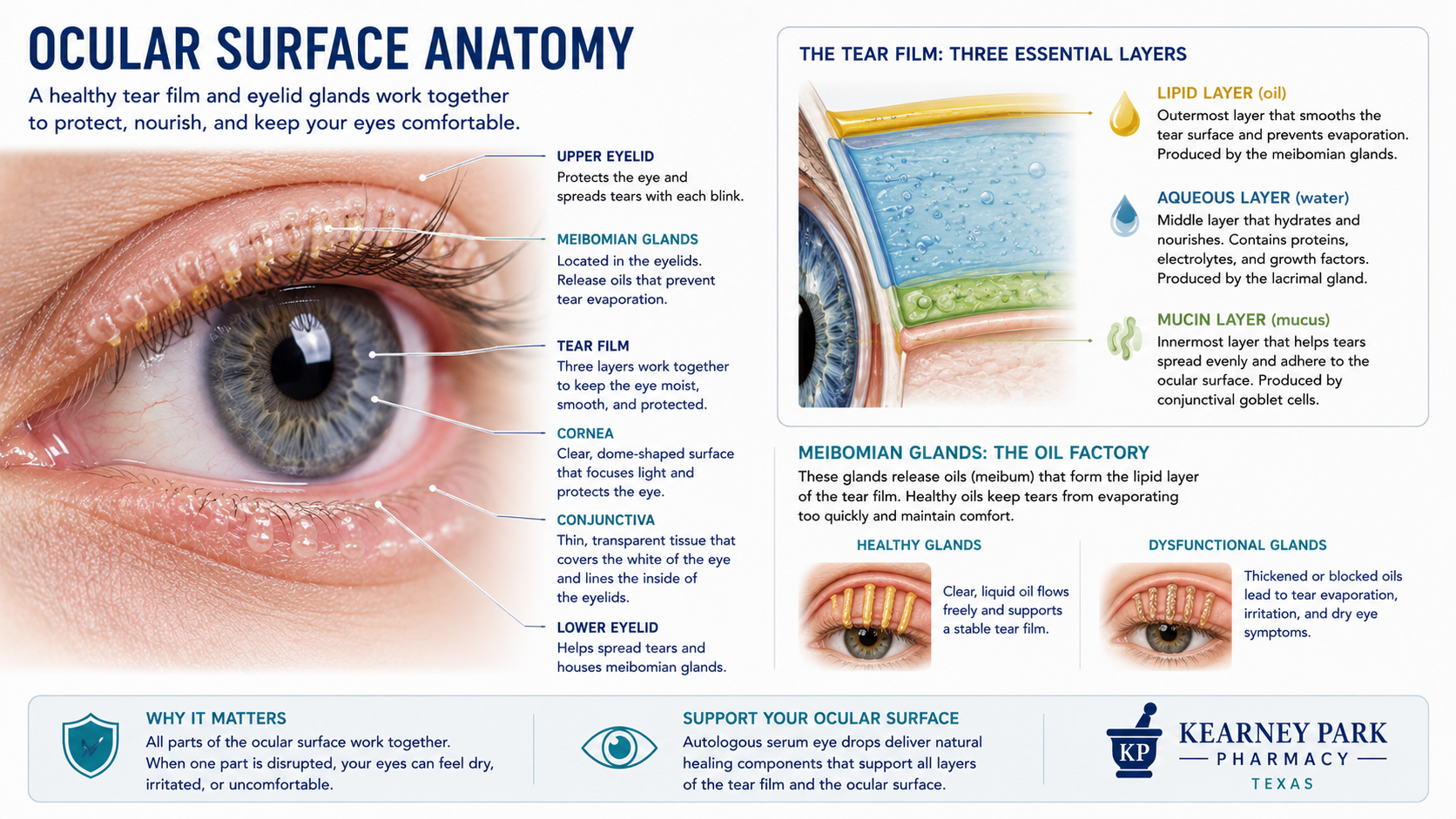
Natural tears contain not just water and lubricants but a complex mixture of growth factors (including EGF, TGF-beta, NGF, and IGF-1), vitamins A and B12, lysozyme, lactoferrin, fibronectin, and immunoglobulins. These components actively support the health, integrity, and repair of the ocular surface epithelium. Commercial artificial tears — even the best ones — do not contain these biological agents in meaningful quantities.
Blood serum has a very similar composition to natural tears for many of these components, making autologous serum a logical substitute when natural tear production is severely deficient or when the ocular surface is damaged in ways that require active biological support for healing.
Clinical Evidence: Sjogren's Syndrome
Patients with Sjogren's syndrome experience severe aqueous-deficient dry eye due to autoimmune damage to the lacrimal glands. Multiple clinical trials have evaluated autologous serum tears in this population. Studies have consistently shown improvements in subjective symptoms (comfort, burning, foreign body sensation), objective signs (corneal and conjunctival staining, Schirmer test values), and ocular surface stability in Sjogren's patients treated with serum tears versus artificial tears.
The evidence is strong enough that major ophthalmology guidelines recognize autologous serum tears as an appropriate treatment for moderate-to-severe Sjogren's-related dry eye in patients who have failed conventional treatments.
Clinical Evidence: Graft-Versus-Host Disease (GVHD)
Ocular graft-versus-host disease (oGVHD) is one of the most challenging eye conditions to treat. It occurs in some patients who have undergone allogeneic hematopoietic stem cell transplant and causes severe, often refractory dry eye and ocular surface inflammation. Standard treatments frequently provide inadequate relief.
Clinical studies and case series have shown that autologous serum tears provide meaningful relief for many oGVHD patients. Improvements in symptoms and ocular surface parameters have been documented in multiple published reports. For oGVHD, autologous serum is now widely considered part of the standard therapeutic armamentarium by cornea and external disease specialists.
Evidence in Other Conditions
Beyond Sjogren's and GVHD, published evidence supports autologous serum tears for persistent epithelial defects (corneal wounds that fail to heal with standard treatment), neurotrophic keratitis (corneal disease from impaired nerve function), and Stevens-Johnson syndrome. In each of these conditions, the common thread is a severely compromised ocular surface that needs more than lubrication — it needs active biological support.
For patients with these conditions, the clinical evidence provides a solid rationale for prescribers to recommend autologous serum tears when conventional treatments have been insufficient.
Frequently Asked Questions
What concentration of autologous serum is typically used?
The two most common concentrations are 20% and 50%. The 20% concentration is a common starting point and is effective for many patients. The 50% concentration is more potent and is used for more severe cases or when 20% provides insufficient benefit. The choice of concentration is a clinical decision made by the prescribing provider.
How long does it take to see improvement with autologous serum tears?
Some patients notice improvement within a few weeks of starting therapy. Others may take longer. Autologous serum tears work by supporting ocular surface healing over time, so consistent daily use as prescribed is important. Your eye doctor will monitor your progress at follow-up visits.
Are autologous serum tears covered by insurance?
Insurance coverage for autologous serum tears varies significantly by plan and diagnosis. Some plans cover them for specific diagnoses like Sjogren's or GVHD. Prior authorization is often required. Contact your insurance provider and ask specifically about coverage for autologous serum ophthalmic drops. Kearney Park Pharmacy can provide documentation to support prior authorization requests. Call 972-329-1168.
READY TO ORDER? CONTACT KEARNEY PARK PHARMACY
Your eye care provider can prescribe autologous serum tears when appropriate. Kearney Park Pharmacy prepares and ships them across Texas. Call 972-329-1168 to learn more.
Phone: 972-329-1168 | Fax: 972-329-1436 | kpprx.org
3224 Gus Thomasson Rd, Mesquite, TX 75150 Shipping Statewide Across Texas