Who Is a Candidate for Autologous Serum Eye Drops?
This is a subtitle for your new post
Who Is a Candidate for Autologous Serum Eye Drops?
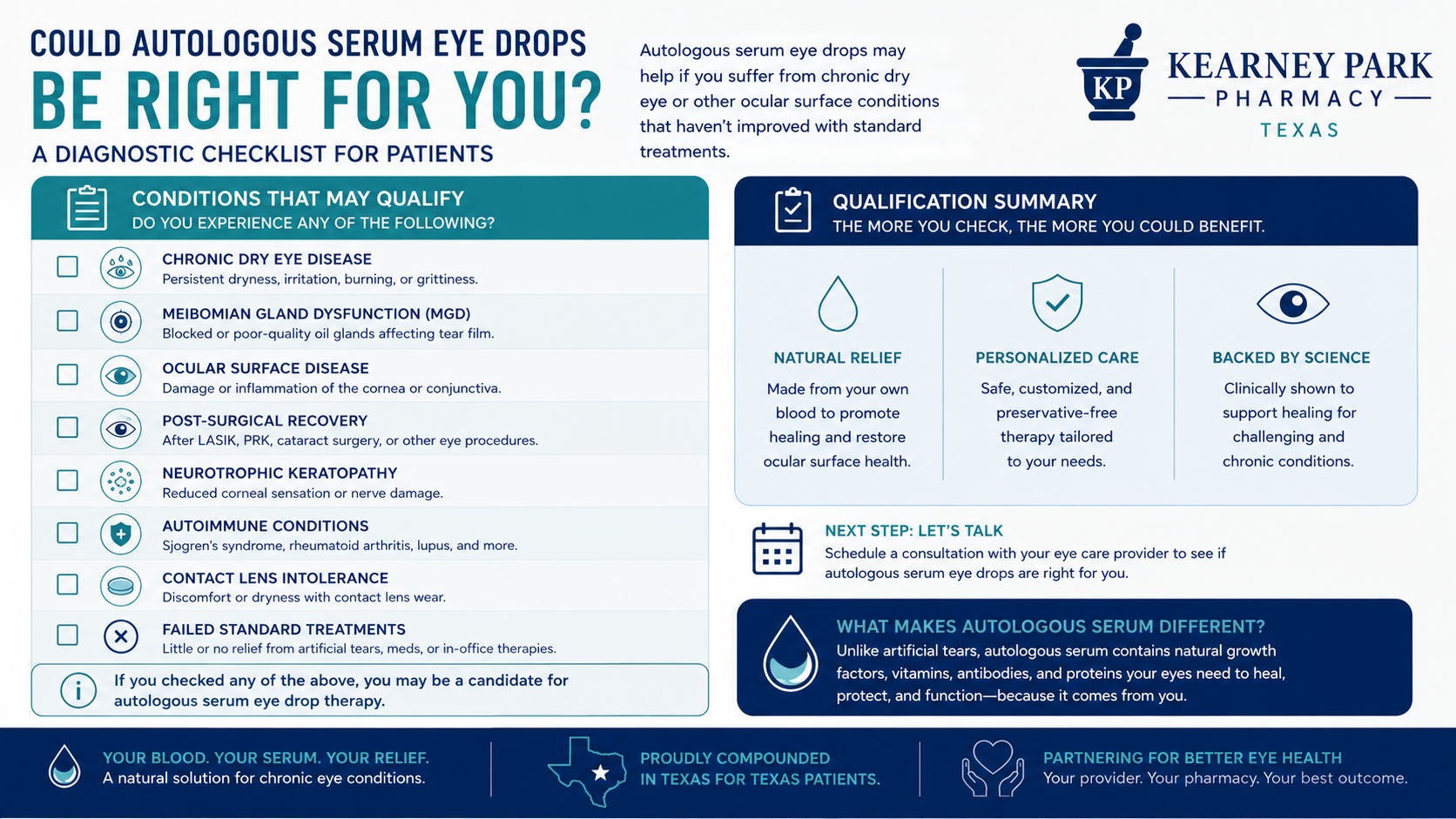
Autologous serum eye drops are not for everyone with dry eyes. They are typically reserved for patients with specific, serious conditions where conventional treatments have not provided adequate relief. Understanding whether you or your patient might be a candidate helps set appropriate expectations and supports timely access to this therapy.
The determination of candidacy is always a clinical decision made by the prescribing eye care provider. This article outlines the general profile of patients who are most often candidates for this therapy.
Primary Candidates: Patients with These Diagnoses
Patients most likely to be candidates for autologous serum tears have one of these diagnoses: Sjogren's syndrome with ocular involvement, graft-versus-host disease affecting the eyes (oGVHD), Stevens-Johnson syndrome (SJS) or toxic epidermal necrolysis with ocular involvement, neurotrophic keratitis, persistent corneal epithelial defects that have not healed with standard treatment, or severe aqueous-deficient dry eye from other causes including post-radiation or chemotherapy damage.
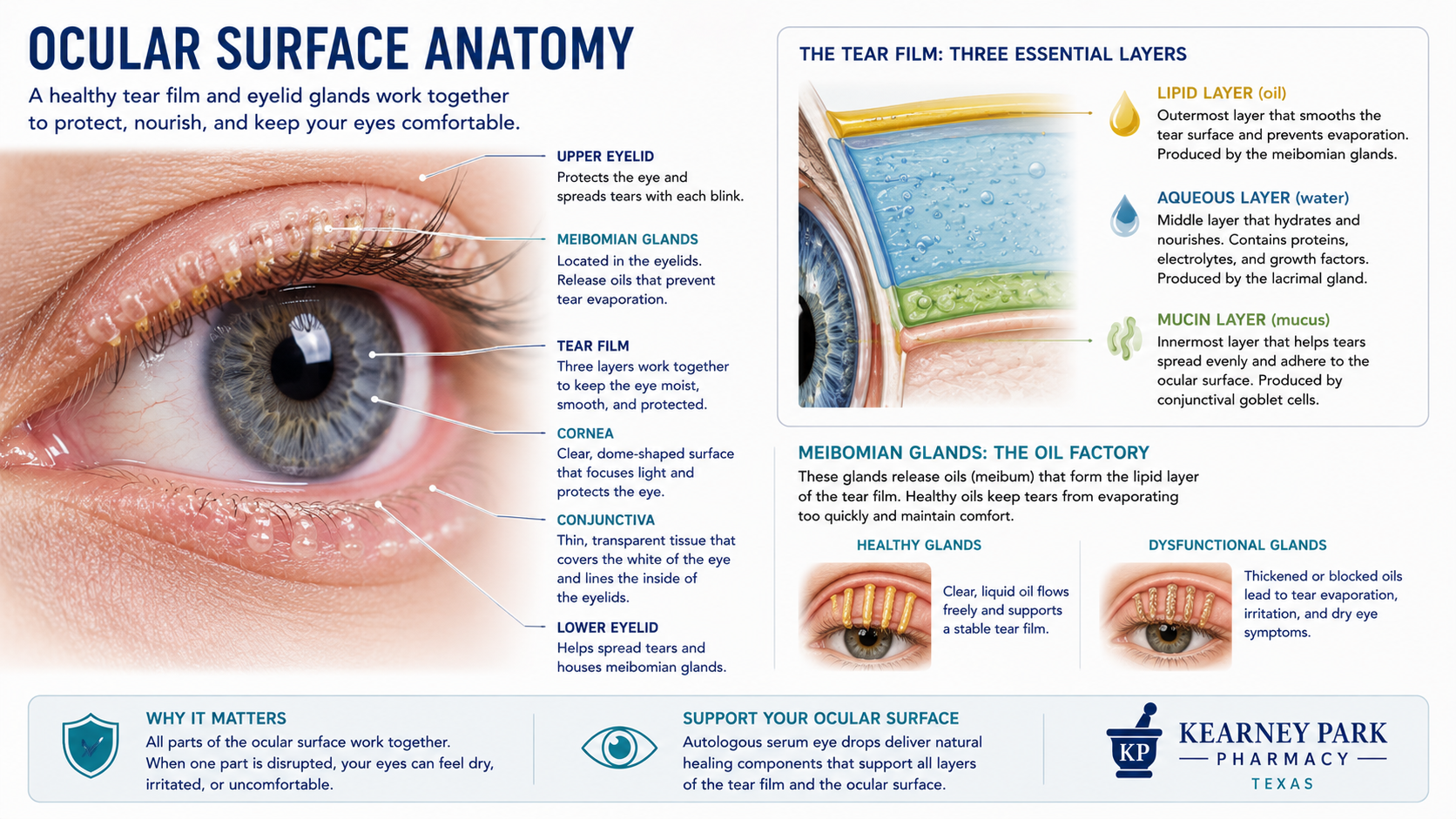
These conditions share a common feature: the ocular surface is damaged or chronically unstable in ways that require more than lubrication. The biological components of autologous serum — growth factors, fibronectin, vitamins — actively promote epithelial cell growth and repair, providing what the damaged surface needs to heal and maintain integrity.
The 'Failed Conventional Treatment' Threshold
Most prescribing guidelines and insurance protocols require that patients have attempted conventional treatments before autologous serum tears are prescribed. Conventional treatments typically include frequent preservative-free artificial tears, gel or ointment lubricants, punctal plugs, warm compresses and lid hygiene, topical anti-inflammatory drops (cyclosporine, lifitegrast), and oral omega-3 supplements.
When these measures have been tried appropriately and the patient continues to have significant symptoms and ocular surface signs, the provider may determine that autologous serum tears are the appropriate next step. For some severe acute conditions (like SJS), the clinical threshold may be lower.
Patients Who Are Typically Not Candidates
Patients with mild or moderate dry eye that is well-controlled with conventional treatments are generally not candidates. Patients with certain blood diseases, active infections, or other medical conditions that would make blood processing or serum quality unreliable need individual evaluation. Patients who are unable to comply with the storage and usage requirements (frozen storage, thawing protocol, frequent use) may also face practical barriers.
Your eye care provider will assess all of these factors to determine whether autologous serum tears are appropriate for you. There is no one-size-fits-all answer.
Next Steps If You Think You Might Be a Candidate
If you have been struggling with severe dry eye or ocular surface disease and conventional treatments have not provided adequate relief, talk to your ophthalmologist or optometrist about whether autologous serum tears might be appropriate. Ask them specifically about your diagnosis and whether your clinical picture fits the profile for this therapy.
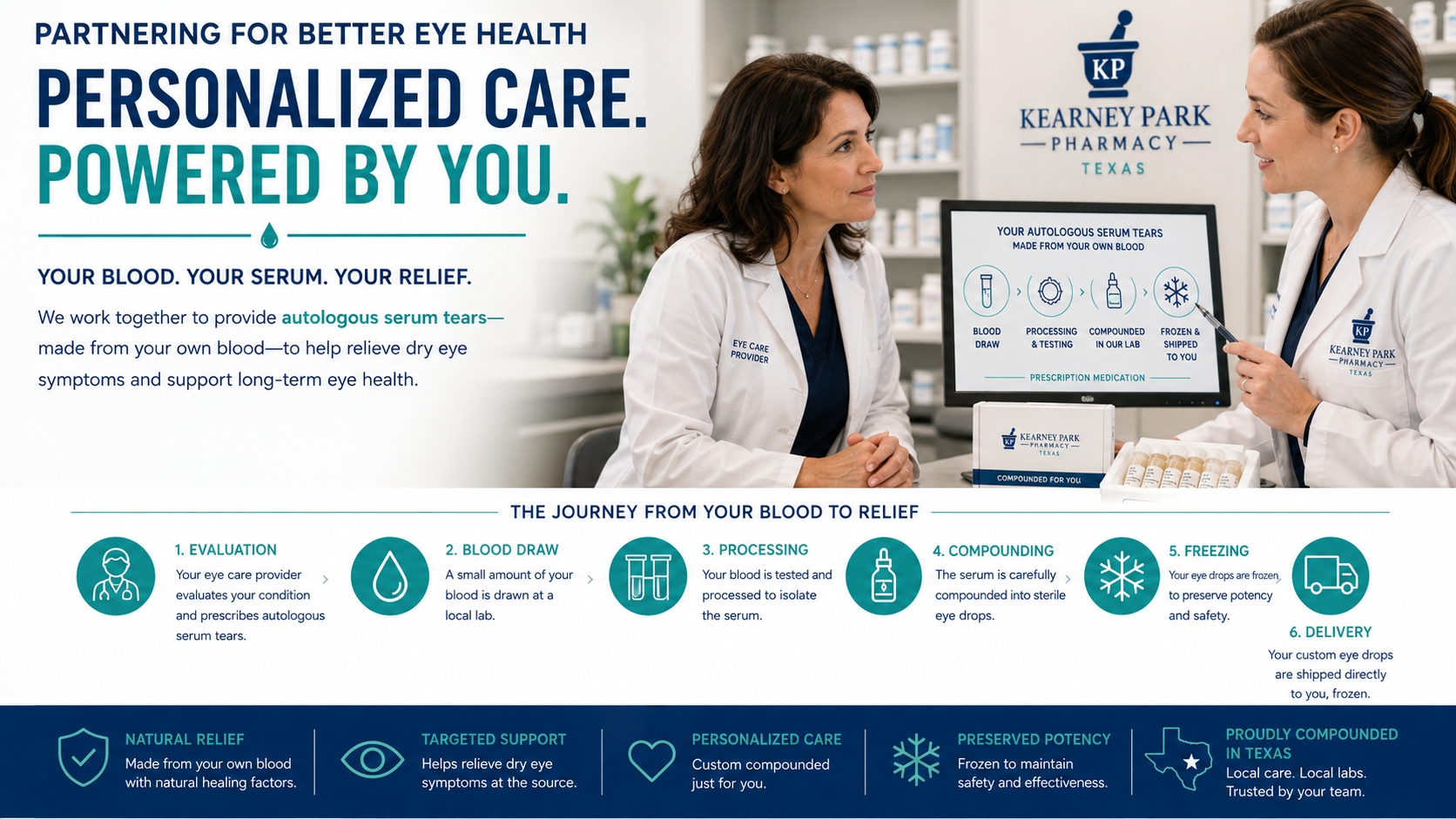
If your provider prescribes autologous serum tears, Kearney Park Pharmacy is ready to manage the preparation process and ship your drops anywhere in Texas. We work closely with providers and patients to make the process as smooth as possible. Call 972-329-1168 with any questions.
Frequently Asked Questions
Can I request autologous serum tears from my eye doctor if I think I need them?
You can certainly ask your eye doctor about them and describe your symptoms and your experience with current treatments. Your provider will evaluate whether your clinical picture meets the criteria for this therapy. The prescription decision belongs to your provider, and they will recommend autologous serum tears only when clinically appropriate.
Does the process require multiple blood draws?
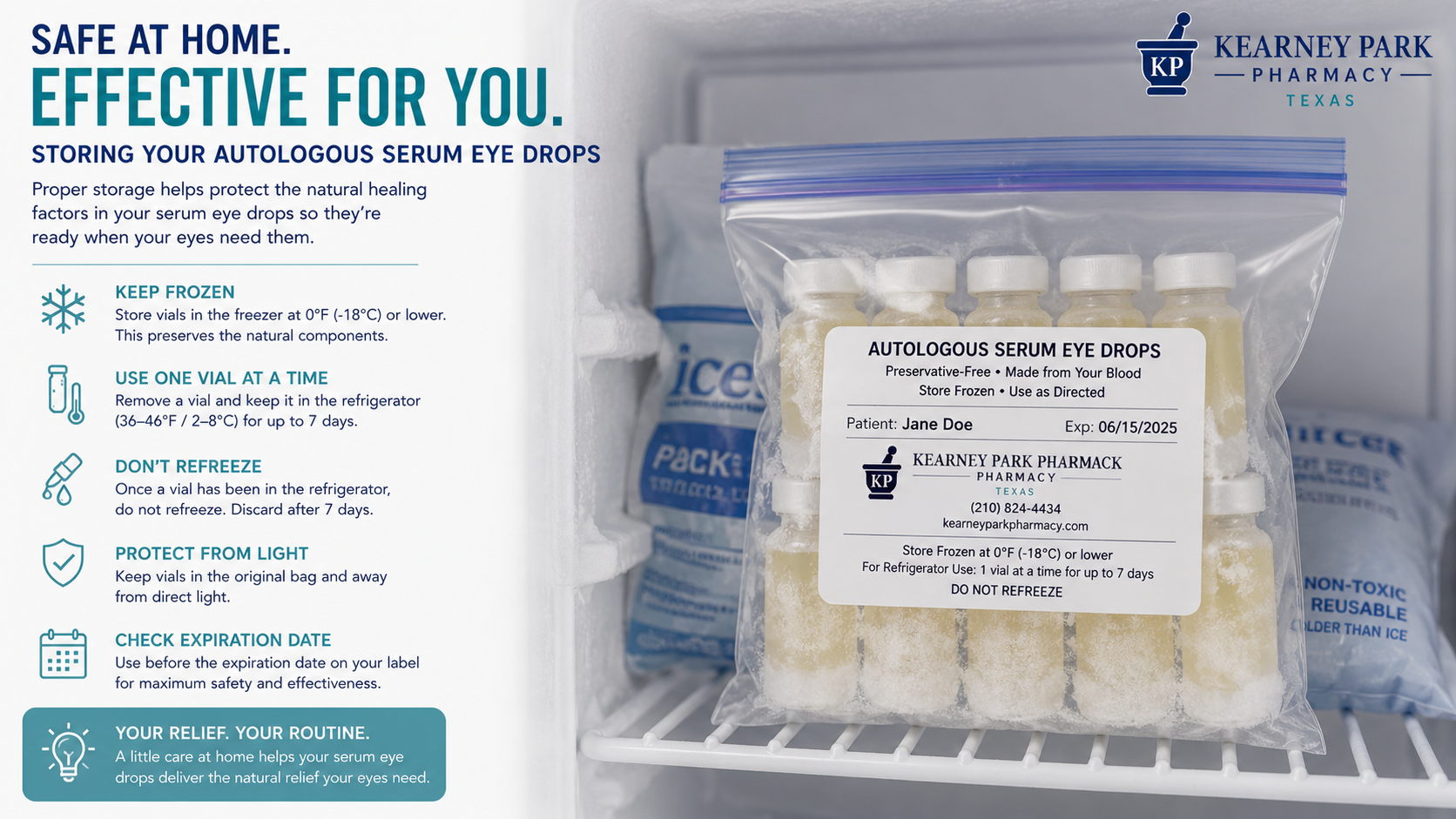
Yes. Because autologous serum has a limited shelf life even when frozen, you will need repeat blood draws over time to maintain your supply. The frequency depends on how many bottles each draw produces and how often you use the drops. Kearney Park Pharmacy coordinates with your provider to schedule preparation around your blood draw timing.
Is the blood draw painful?
A blood draw for autologous serum tears is the same as a standard phlebotomy (venipuncture). Most patients experience only brief, mild discomfort. The volume drawn (typically 40-100mL) is well within the safe range for a healthy adult. If you have concerns about the blood draw, discuss them with your provider.
READY TO ORDER? CONTACT KEARNEY PARK PHARMACY
Talk to your eye care provider about autologous serum tears. When prescribed, Kearney Park Pharmacy handles the preparation and ships across Texas. Call 972-329-1168.
Phone: 972-329-1168 | Fax: 972-329-1436 | kpprx.org
3224 Gus Thomasson Rd, Mesquite, TX 75150 Shipping Statewide Across Texas