By Park
•
June 4, 2026
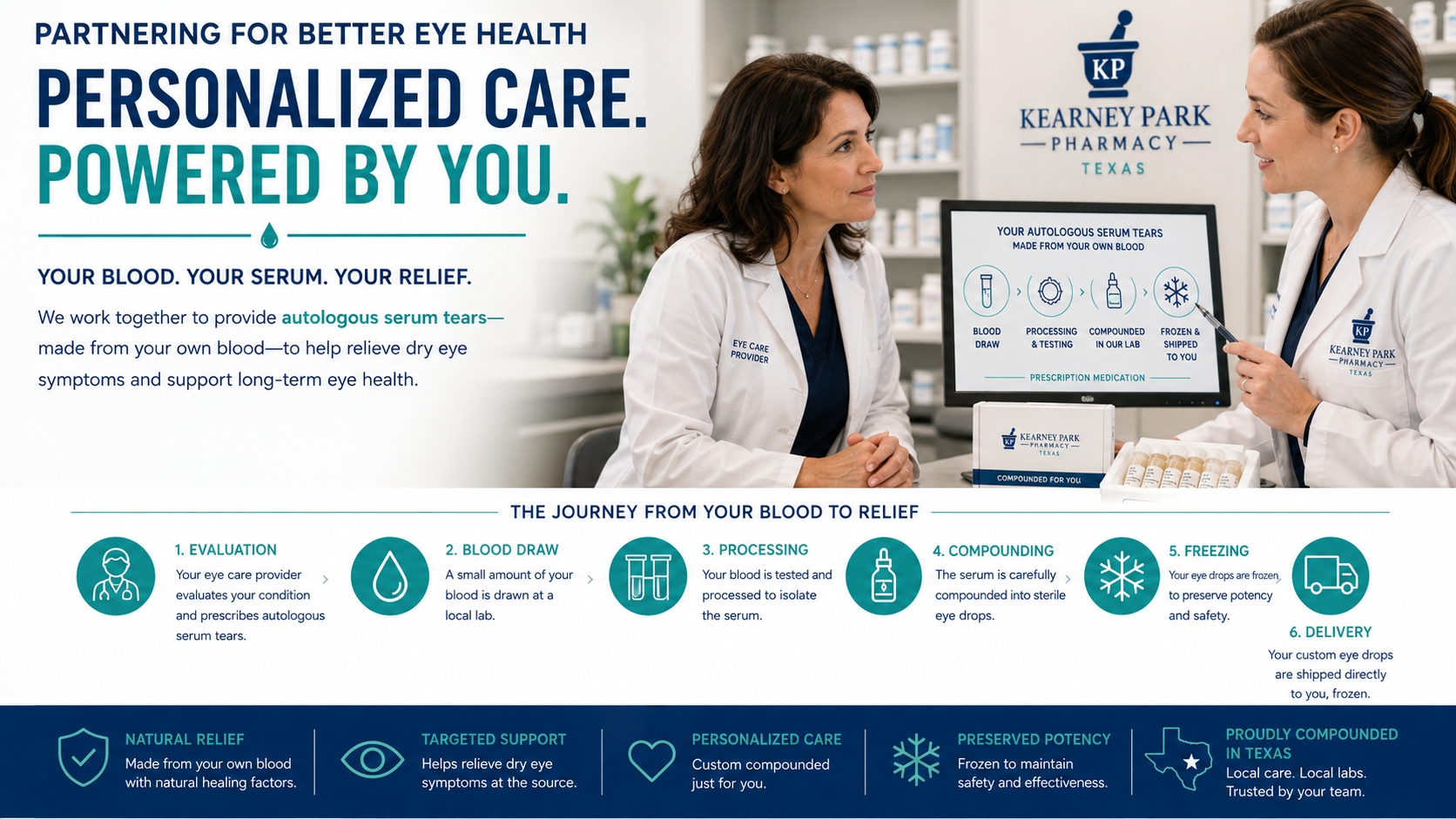
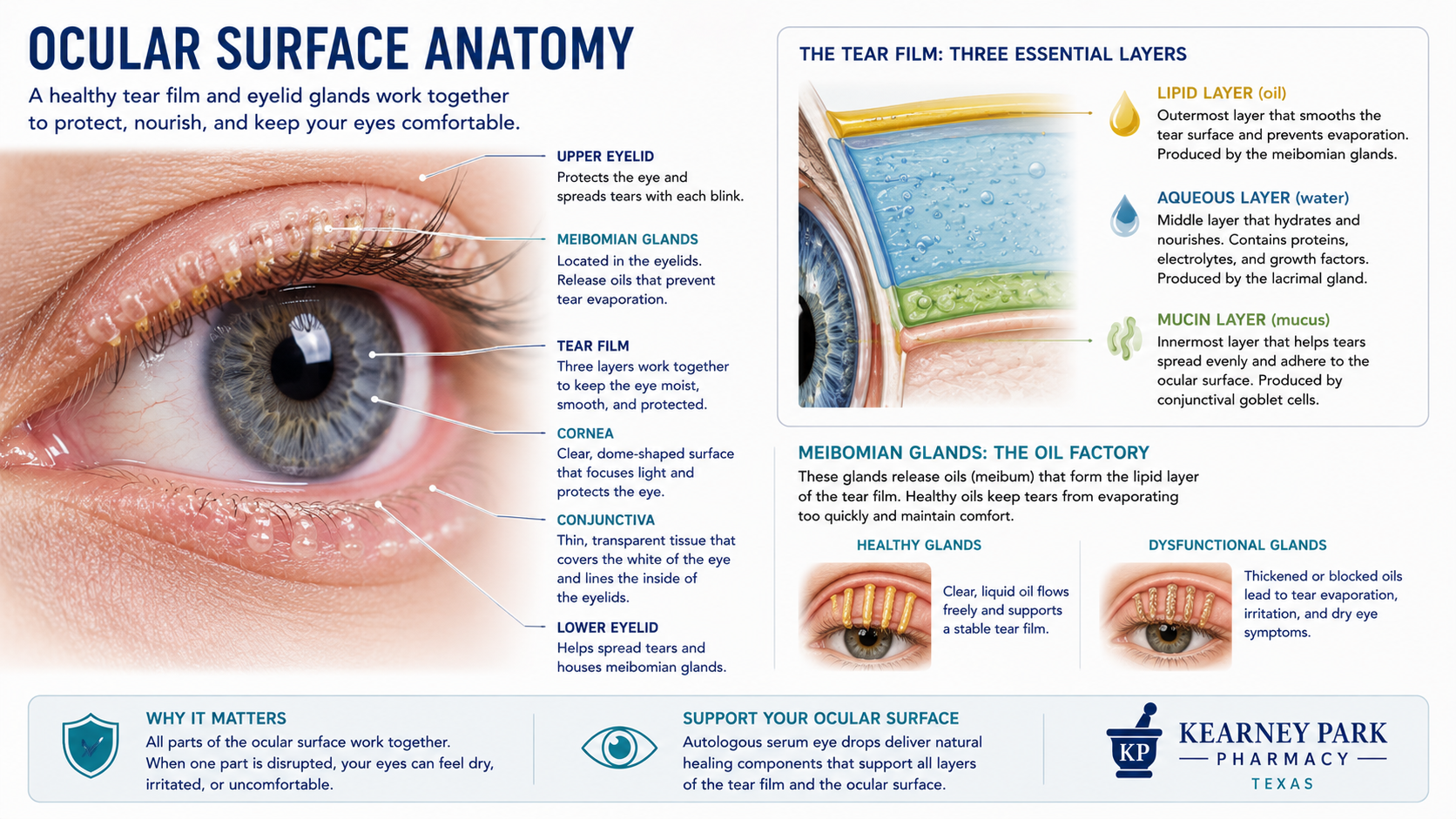
Ocular Surface Disease and the Role of Autologous Serum Tears Ocular surface disease (OSD) is an umbrella term encompassing a range of conditions that affect the health and function of the eye's surface — the cornea, conjunctiva, and tear film. It is one of the most common reasons patients see an eye doctor and one of the most impactful in terms of quality of life. Severe OSD can cause constant discomfort, reduced vision, and significant functional limitations. For patients with severe or refractory OSD, autologous serum tears represent one of the most biologically meaningful therapeutic options available. Here is how they fit into the management of OSD. What Is Ocular Surface Disease? The ocular surface includes the corneal and conjunctival epithelium, the tear film, the meibomian glands (which produce the lipid layer of tears), the lacrimal glands (which produce the aqueous layer), and the goblet cells (which produce mucins). Disease affecting any of these components can cause the constellation of symptoms that patients describe as dry eye, burning, gritty sensation, light sensitivity, and blurred vision. OSD can range from mild evaporative dry eye (very common, often managed with over-the-counter artificial tears and warm compresses) to severe aqueous-deficient dry eye (as seen in Sjogren's syndrome) or severe inflammatory and destructive surface disease (as in GVHD, SJS, or neurotrophic keratitis). The more severe end of this spectrum is where autologous serum tears are most clinically relevant. How Autologous Serum Addresses the Biological Deficit In severe OSD, the tear film is not just insufficient in volume — it lacks the biological components needed to sustain healthy surface cells. The surface epithelium, deprived of growth factors, vitamins, and structural proteins, becomes unstable, inflamed, and prone to breakdown. This is not a problem that more lubricant can fix. Autologous serum tears introduce the biological components that the compromised tear film cannot provide. EGF and other growth factors stimulate epithelial cell proliferation and migration — essential for healing the surface. Fibronectin supports cell attachment. Vitamin A normalizes epithelial differentiation. The result, in patients who respond to therapy, is a surface that heals and stabilizes rather than one that continues to break down. Integration with Other OSD Treatments Autologous serum tears are not used in isolation — they are part of a comprehensive OSD management plan. Patients typically continue other appropriate treatments alongside serum drops: anti-inflammatory drops (cyclosporine, lifitegrast), meibomian gland treatments if applicable, punctal plugs if appropriate, and other supportive measures. Serum tears provide the biological support component that other treatments do not. Your ophthalmologist will design a treatment plan that addresses all components of your OSD. Autologous serum tears fit into that plan as one element, typically prescribed when the surface disease is severe enough to require their biological support in addition to standard therapies. Getting Access to Autologous Serum Tears in Texas For Texas patients with severe OSD, access to autologous serum tears requires a prescription from an eye care provider and a compounding pharmacy capable of preparing them properly. Kearney Park Pharmacy is a licensed sterile compounding pharmacy in Mesquite, Texas, that coordinates the full process — from blood draw logistics to sterile preparation to statewide shipping. We work with ophthalmologists, optometrists, and cornea specialists across Texas to serve their patients with severe OSD. If your provider has prescribed autologous serum tears or is considering doing so, call us at 972-329-1168 or ask them to contact us directly. Frequently Asked Questions How often do I apply autologous serum drops for OSD? Dosing varies by condition and severity. Common regimens range from 4 to 8 times daily, and some protocols use them hourly in acute situations. Your prescribing provider will specify the exact dosing on your prescription. Always follow your provider's instructions. What if my OSD has not improved after several months of serum tears? Report this to your eye care provider. They will reassess your condition, evaluate whether your diagnosis is accurate, consider adjusting the concentration or frequency, or explore additional or alternative treatments. Autologous serum tears are highly effective for many patients but not a universal solution for all forms of OSD. Does Kearney Park Pharmacy work with cornea specialists? Yes. We work with cornea specialists and general ophthalmologists across Texas who prescribe autologous serum tears. If you are a cornea specialist and want to establish a referral relationship with us, call 972-329-1168. We handle the entire preparation and shipping process so your patients receive a seamless experience. READY TO ORDER? CONTACT KEARNEY PARK PHARMACY Kearney Park Pharmacy prepares autologous serum tears for Texas patients with ocular surface disease. Ask your eye doctor for a prescription and call us at 972-329-1168. Phone: 972-329-1168 | Fax: 972-329-1436 | kpprx.org 3224 Gus Thomasson Rd, Mesquite, TX 75150 Shipping Statewide Across Texas